
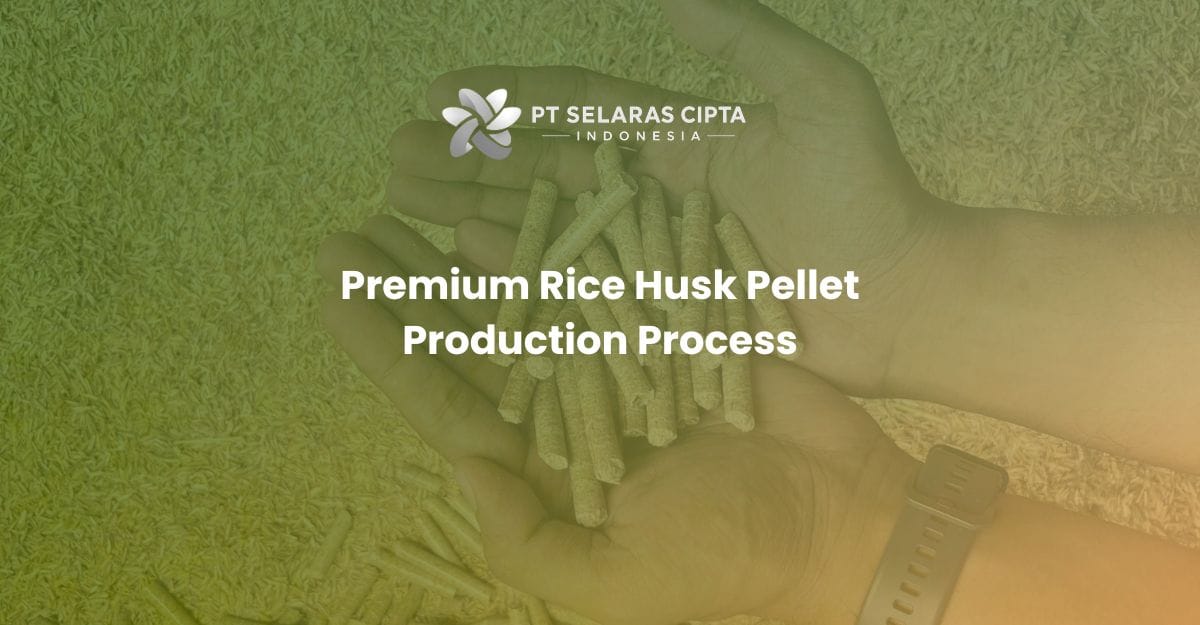
The global biomass industry continues to grow because many factories, food processing plants, textile manufacturers, and industrial boilers now seek cleaner and more stable alternatives to coal. Among the many biomass options available today, PT. Selaras Cipta Indonesia continues to strengthen its position by producing premium-quality Rice Husk Pellet for industrial applications.
However, many companies still misunderstand the actual rice husk pellet production process. Some assume biomass pellets only require agricultural waste and pellet machines. Others believe every rice husk pellet offers the same combustion quality. In reality, premium biomass production requires precision, strict quality control, technical experience, and long-term consistency.
Poor-quality pellets often create serious industrial problems. Boilers may suffer from unstable heat, excessive ash accumulation, clinker formation, higher maintenance costs, and inefficient combustion. Because of that, industries increasingly prioritize pellet manufacturers that focus on process stability instead of simply maximizing production volume.
This article explores the rice husk pellet production process in a much deeper way. Instead of repeating generic manufacturing explanations, this guide explains how premium biomass pellets are produced through careful raw material selection, controlled moisture management, optimized pelletizing systems, and strict combustion quality monitoring.
More importantly, this article also explains why consistent production standards matter for industrial users. Premium pellets do not happen by accident. Strong combustion performance begins long before the pellets enter industrial boilers. Every production stage directly influences energy efficiency, operational stability, fuel consumption, and long-term maintenance costs.
For that reason, PT. Selaras Cipta Indonesia continuously prioritizes quality-focused production systems to ensure customers receive biomass fuel that delivers reliable industrial performance.
Understanding Why Rice Husk Has Strong Biomass Potential
Rice-producing countries generate enormous quantities of rice husk every year. In the past, many rice mills treated rice husk as low-value agricultural waste. Large piles often accumulated near milling facilities, while some operators burned the material openly without utilizing its energy potential properly.
Today, the situation has changed significantly. Industries now recognize rice husk as an important renewable energy source because it contains valuable calorific properties suitable for industrial combustion systems. At the same time, rising fossil fuel costs continue pushing manufacturers toward more sustainable fuel alternatives.
Even so, rice husk differs greatly from ordinary biomass materials such as wood sawdust. Rice husk contains high silica levels, abrasive textures, low natural binding properties, and inconsistent moisture conditions. These characteristics create additional technical challenges during pellet production.
Because of these challenges, premium rice husk pellet manufacturing requires far more than standard machinery. Production teams must carefully manage particle consistency, temperature control, moisture balance, and compression ratios throughout the entire process.
This is exactly why many low-grade biomass products fail to deliver stable industrial performance. Without proper production standards, pellets may crack easily, produce excessive dust, burn inefficiently, or create operational problems inside industrial boilers.
Meanwhile, PT. Selaras Cipta Indonesia continuously focuses on process optimization and premium-quality manufacturing standards to ensure every pellet batch supports reliable industrial combustion performance.
Why Premium Quality Rice Husk Pellets Matter for Industrial Boilers
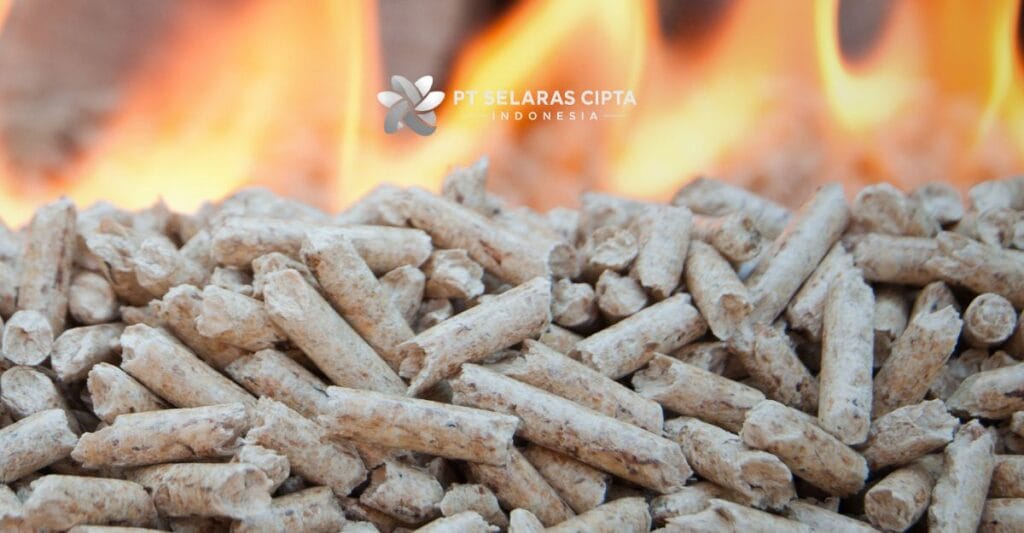
Industrial boilers require fuel consistency to maintain stable operations. Unfortunately, many biomass users only compare pellet prices without considering combustion quality. This approach often creates much larger operational costs in the long run.
Low-quality pellets usually contain unstable moisture levels, inconsistent density, excessive contaminants, and weak structural durability. As a result, combustion temperatures fluctuate frequently, ash accumulation increases rapidly, and boiler cleaning intervals become shorter.
Furthermore, unstable pellets may generate excessive fines and dust during transportation. Dust accumulation creates feeding instability inside biomass systems and increases operational inefficiencies.
Premium-quality pellets solve these problems by delivering more stable combustion characteristics. Consistent pellet density supports smoother feeding systems. Controlled moisture levels improve thermal efficiency. Better compression quality reduces dust generation. Cleaner raw materials minimize ash-related issues.
Because industrial performance depends heavily on fuel stability, PT. Selaras Cipta Indonesia prioritizes strict quality control throughout the rice husk pellet production process. Instead of focusing only on production quantity, the company continuously maintains manufacturing consistency to support long-term industrial reliability.
At the same time, premium pellets also help industries reduce maintenance downtime, improve combustion efficiency, and optimize operational costs over time. These advantages make high-quality biomass fuel far more valuable than low-cost alternatives that create continuous operational disruptions.
Raw Material Selection Becomes the Foundation of Premium Pellet Quality
Every premium rice husk pellet begins with careful raw material selection. This stage determines whether the final product can achieve stable combustion performance or not. Unfortunately, many biomass manufacturers underestimate the importance of raw material consistency.
Rice husk quality varies significantly depending on storage conditions, harvesting methods, rice milling systems, seasonal humidity, and contamination exposure. Some rice husk materials contain excessive dirt, sand, or foreign particles that negatively affect pellet durability and combustion quality.
Therefore, professional biomass manufacturers must carefully evaluate incoming raw materials before production begins.
Contaminant Control Directly Influences Combustion Stability
Contaminated raw materials create multiple operational problems during biomass production. Sand and stones accelerate equipment wear. Metal fragments damage pelletizing systems. Excessive dirt increases ash content and reduces combustion efficiency.
Because of that, premium manufacturers implement strict screening and cleaning procedures before processing rice husk materials further.
PT. Selaras Cipta Indonesia continuously prioritizes raw material cleanliness because cleaner biomass directly supports better combustion quality. This approach not only protects production equipment but also helps maintain stable pellet durability and improved industrial boiler performance.
Moreover, cleaner raw materials reduce long-term maintenance requirements for industrial customers. Boilers operate more efficiently when fuel quality remains stable and contamination levels stay under control.
This commitment to cleaner production standards helps ensure customers receive premium biomass fuel suitable for demanding industrial applications.
Moisture Consistency Plays a Critical Role in Pellet Durability
Moisture management remains one of the most important factors in rice husk pellet manufacturing. Even slight moisture variations can dramatically affect pellet structure, density, and combustion behavior.
Excessive moisture weakens pellet integrity and increases production instability. Meanwhile, overly dry materials reduce natural binding performance during compression.
For that reason, professional biomass production requires continuous moisture monitoring and controlled drying systems.
PT. Selaras Cipta Indonesia carefully manages moisture consistency throughout the production process because stable moisture levels help create stronger, denser, and more reliable pellets.
This attention to detail improves transportation durability, minimizes dust generation, and supports more stable combustion performance inside industrial boilers.
As industries increasingly demand higher biomass fuel standards, moisture control continues becoming one of the key differentiators between premium manufacturers and low-grade suppliers.
Advanced Screening and Cleaning Systems Improve Production Quality
Many low-cost pellet factories attempt to reduce operational expenses by simplifying their cleaning systems. Unfortunately, this shortcut often creates long-term quality problems.
Professional rice husk pellet manufacturing requires advanced screening systems capable of removing unwanted contaminants before pelletizing begins.
Vibrating screens, magnetic separators, dust collectors, and air classification systems help improve biomass purity while protecting production equipment from excessive wear.
Cleaner Biomass Supports Better Pellet Performance
Premium pellet quality depends heavily on feedstock cleanliness. Cleaner biomass materials improve pellet density, combustion consistency, and ash stability.
At the same time, proper cleaning systems reduce the risk of mechanical failures inside hammer mills, conveyors, and pellet machines.
PT. Selaras Cipta Indonesia continuously maintains strict raw material preparation standards because production quality begins long before pellet compression occurs.
This production philosophy helps ensure every pellet batch delivers stable industrial performance instead of inconsistent combustion behavior.
Furthermore, cleaner pellets create operational advantages for industrial customers. Boilers experience lower contamination buildup, reduced ash complications, and improved thermal efficiency over time.
These benefits demonstrate why professional biomass production requires serious investment in quality-focused preparation systems.
Grinding and Particle Size Optimization Improve Pellet Consistency
Although rice husk particles already appear relatively small, grinding still plays an important role in premium pellet manufacturing.
Particle size consistency directly affects compression behavior, pellet density, structural durability, and combustion stability. Uneven particles often create air gaps inside pellets, reducing overall quality.
Therefore, professional manufacturers optimize grinding systems carefully instead of processing biomass randomly.
Balanced Particle Size Improves Compression Efficiency
Overly coarse particles reduce pellet density. Meanwhile, excessively fine particles create dust problems and increase operational risks during production.
Because of this balance requirement, manufacturers must optimize grinding systems according to pellet mill specifications and combustion targets.
PT. Selaras Cipta Indonesia continuously focuses on particle consistency because stable material preparation improves pellet durability and combustion efficiency significantly.
This approach also helps stabilize production flow while reducing unnecessary mechanical stress on pelletizing equipment.
In addition, optimized particle structures improve feeding stability inside industrial combustion systems. Boilers operate more efficiently when pellet composition remains uniform throughout the combustion cycle.
These technical details may seem small, but they strongly influence long-term industrial performance.
Conditioning Systems Improve Pellet Formation Quality
Conditioning remains one of the most overlooked stages in biomass manufacturing. Even so, this process strongly affects pellet durability and compression stability.
During conditioning, manufacturers carefully adjust temperature and moisture levels before pelletizing begins. Proper conditioning softens biomass fibers and improves material flexibility during compression.
Without proper conditioning, pellets often crack easily and produce excessive fines during transportation.
Temperature Control Supports Stronger Pellet Structures
Pellet formation depends heavily on controlled thermal conditions. Excessive temperatures damage material quality, while insufficient heat weakens compression performance.
Because of that, professional manufacturers continuously monitor conditioning systems to maintain stable production environments.
PT. Selaras Cipta Indonesia prioritizes controlled conditioning systems because premium pellet quality requires stable structural formation from the beginning.
This careful process helps produce pellets with stronger durability, smoother feeding performance, and more consistent industrial combustion characteristics.
Furthermore, proper conditioning improves production efficiency by reducing die stress and minimizing unnecessary energy consumption during pelletizing operations.
These advantages allow premium manufacturers to maintain better long-term production stability while supporting higher biomass quality standards.
Pelletizing Becomes the Core of the Rice Husk Pellet Production Process
The pelletizing stage transforms prepared rice husk materials into dense industrial biomass fuel. During this process, rollers compress biomass through hardened dies under high pressure and controlled temperature conditions.
However, successful pelletizing requires much more than mechanical force alone.
Pressure stability, feed consistency, moisture control, and die configuration all influence final pellet quality.
Compression Stability Determines Pellet Density and Durability
Unstable compression often creates weak pellets with inconsistent density. These pellets may crack during storage, transportation, or combustion handling.
Meanwhile, stable compression systems improve structural durability and reduce fines generation significantly.
PT. Selaras Cipta Indonesia continuously optimizes pelletizing operations to ensure premium combustion performance for industrial customers.
This commitment helps produce pellets with stable density, improved handling durability, and consistent thermal output.
At the same time, optimized pelletizing systems also improve combustion predictability inside industrial boilers. Reliable fuel characteristics help industries maintain operational efficiency while minimizing unexpected maintenance disruptions.
As industrial biomass demand continues increasing, pelletizing precision becomes increasingly important for long-term customer satisfaction.
Die Quality and Equipment Maintenance Affect Long-Term Production Consistency
Rice husk contains abrasive silica compounds that accelerate equipment wear significantly. Because of this characteristic, pellet dies and rollers require careful monitoring and regular maintenance.
Manufacturers that ignore maintenance schedules often experience declining pellet quality, unstable production flow, and higher operational costs.
PT. Selaras Cipta Indonesia continuously prioritizes preventive maintenance strategies to maintain production consistency and premium pellet quality.
This proactive approach helps ensure every production batch meets strict combustion standards instead of fluctuating unpredictably.
Moreover, well-maintained equipment supports more efficient energy usage during production. Stable machinery conditions reduce unnecessary friction losses and improve operational reliability over time.
These production standards demonstrate why premium biomass manufacturing requires technical discipline at every stage of the process.
Cooling and Screening Protect Pellet Quality Before Distribution
Fresh pellets exit the pellet mill at elevated temperatures. Without proper cooling, moisture condensation may occur during storage and transportation.
Condensation weakens pellet structures and increases the risk of biological degradation.
Because of that, professional manufacturers implement controlled cooling systems before packaging begins.
Cooling Improves Structural Stability and Storage Performance
Proper cooling strengthens pellet hardness and stabilizes internal moisture conditions.
At the same time, screening systems separate broken pellets and excessive fines before distribution.
PT. Selaras Cipta Indonesia continuously maintains strict post-production handling standards because final product stability remains essential for industrial reliability.
This approach helps customers receive biomass fuel that maintains its structural quality during storage, transportation, and combustion handling.
Furthermore, stable pellet conditions improve feeding performance inside automated boiler systems. Industrial operations become smoother when fuel quality remains consistent from production to combustion.
These advantages highlight the importance of quality-focused handling systems throughout the entire manufacturing process.
Strict Quality Control Ensures Premium Industrial Biomass Standards
Professional biomass production never ends after pellet packaging. Quality control continues throughout testing, inspection, and combustion evaluation stages.
Premium manufacturers must verify pellet density, moisture content, ash behavior, durability, and combustion consistency before delivering products to customers.
Combustion Performance Becomes the Final Quality Benchmark
Industrial customers require more than visually attractive pellets. They require fuel capable of supporting stable combustion performance under demanding operational conditions.
Because of that, combustion testing remains one of the most important quality evaluation stages.
PT. Selaras Cipta Indonesia continuously prioritizes combustion-focused quality standards to ensure customers receive reliable biomass fuel for industrial applications.
This commitment supports more efficient thermal performance, lower maintenance risks, and improved long-term operational stability.
In addition, consistent quality control helps industries avoid fuel-related operational disruptions that may increase downtime and maintenance expenses.
As biomass energy adoption continues expanding globally, manufacturers that maintain strict quality standards will continue earning greater industrial trust.
Conclusion
The rice husk pellet production process involves far more than compressing agricultural waste into biomass fuel. Premium pellet manufacturing requires careful raw material selection, controlled moisture management, optimized particle preparation, stable conditioning systems, precision pelletizing, and strict quality monitoring.
Every production stage directly influences combustion performance, boiler efficiency, maintenance requirements, and long-term operational stability.
Because of that, industries increasingly prioritize manufacturers capable of delivering consistent premium-quality biomass fuel instead of low-cost pellets with unstable performance.
PT. Selaras Cipta Indonesia continuously focuses on premium production standards to ensure customers receive high-quality rice husk pellets suitable for demanding industrial applications.
Through strict quality control, optimized manufacturing systems, and long-term commitment to consistency, the company continues supporting industries seeking cleaner, more efficient, and more reliable renewable energy solutions.
As global demand for sustainable industrial fuel continues growing, premium-quality rice husk pellets will play an increasingly important role in the future of biomass energy.