
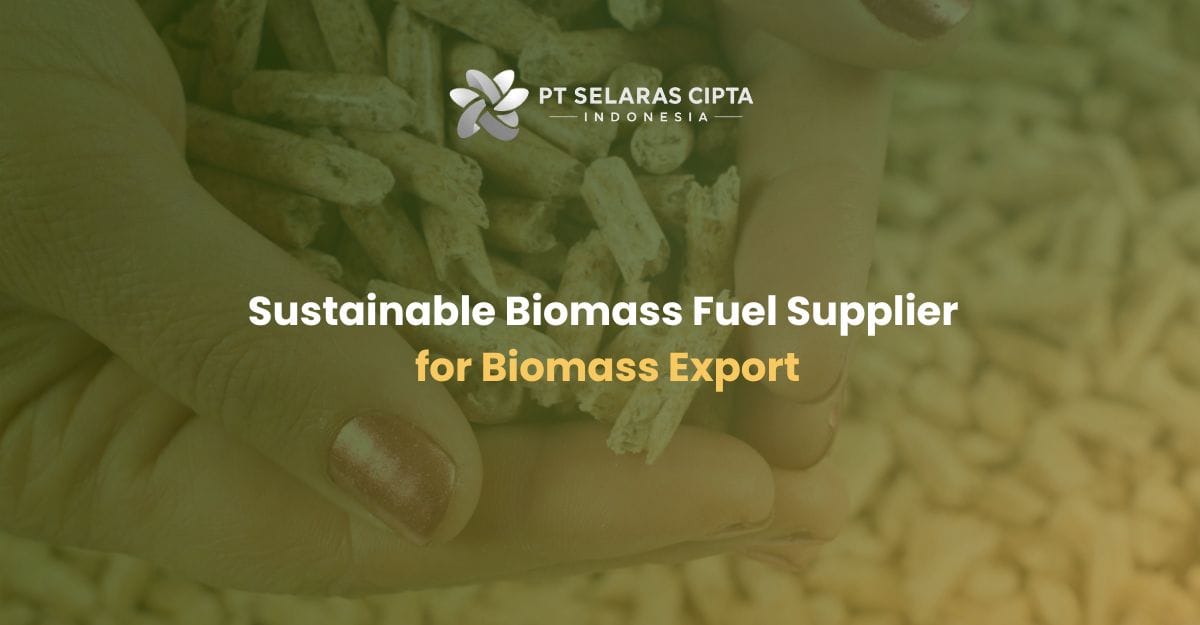
Industrial energy systems now require more than affordable fuel pricing alone. Manufacturers, power plants, and industrial boiler operators increasingly evaluate fuel stability, shipment reliability, production transparency, and sustainability before selecting long-term biomass suppliers. Because of this shift, sustainable biomass fuel supplier selection has become a critical part of industrial energy strategy rather than a simple procurement decision.
Many biomass projects initially focus on calorific value or moisture specifications. However, unstable shipment schedules, inconsistent pellet quality, and poor logistics management may eventually create larger operational problems than fuel pricing itself. Consequently, industrial buyers now prioritise suppliers capable of maintaining consistent production standards, responsible raw material sourcing, and reliable export coordination.
At the same time, renewable energy transition programmes continue accelerating worldwide. Industries seek practical ways to reduce fossil fuel dependency while maintaining operational efficiency. Biomass fuel therefore plays an increasingly important role in industrial boilers, co-firing systems, steam production facilities, and renewable thermal energy applications.
Why Sustainable Biomass Fuel Suppliers Matter
Industrial biomass systems require stable fuel quality and dependable supply continuity in order to maintain efficient operation. Unlike short-term commodity purchasing, biomass fuel procurement often involves long-term operational planning and continuous shipment requirements.
Industrial Operations Require Stable Biomass Supply
Fuel inconsistency may disrupt combustion stability, reduce energy efficiency, and increase maintenance frequency inside industrial systems. Because of this, industries increasingly evaluate supplier capability before entering long-term procurement agreements.
Fuel Consistency Supports Industrial Efficiency
Several operational advantages depend heavily on stable biomass quality:
- Stable biomass improves combustion performance.
- Consistent fuel reduces operational disruption.
- Reliable supply supports long-term production stability.
Industrial boilers and co-firing systems require predictable fuel behaviour in order to maintain stable thermal output. When biomass specifications fluctuate excessively between shipments, operators may experience unstable combustion conditions and irregular steam generation.
As a result, long-term industrial biomass projects require suppliers capable of maintaining consistent pellet quality across repeated export shipments.
Poor Biomass Quality Increases Operational Risk
Unstable biomass quality may eventually create operational inefficiency and maintenance problems.
Several risks commonly appear when biomass quality remains inconsistent:
- Inconsistent fuel may reduce boiler efficiency.
- High moisture weakens combustion stability.
- Excessive ash may increase maintenance frequency.
For example, wet biomass pellets may reduce calorific performance while increasing fuel consumption unnecessarily. Likewise, excessive ash accumulation may require more intensive boiler cleaning procedures.
Consequently, industrial buyers increasingly evaluate biomass quality control systems before approving long-term supply contracts.
Characteristics of a Sustainable Biomass Fuel Supplier
Not every biomass exporter operates with the same production standards or operational capability. Some companies mainly function as trading intermediaries, while others directly manage biomass production facilities and export operations.
Sustainable Raw Material Management
Raw material sourcing strongly influences both biomass quality and long-term supply stability.
Agricultural Biomass Supports Circular Economy
Agricultural biomass continues gaining industrial attention because it converts production residue into renewable energy fuel.
Several sustainability advantages include:
- Agricultural waste reduces environmental burden.
- Biomass conversion supports renewable energy goals.
- Sustainable sourcing improves long-term supply stability.
Rice husk, for instance, originates from rice milling operations that continuously generate agricultural residue in large quantities. Instead of becoming landfill waste or open-burning material, rice husk can undergo conversion into industrial biomass fuel.
This approach supports circular economy principles while improving renewable energy utilisation simultaneously.
Responsible Biomass Procurement Practices
Sustainable biomass fuel suppliers should also maintain responsible sourcing systems and stable raw material management.
Important sourcing considerations include:
- Raw material consistency affects fuel quality.
- Sustainable sourcing supports export reliability.
- Traceability improves industrial procurement confidence.
When suppliers manage raw material procurement carefully, pellet quality becomes easier to maintain consistently. In contrast, unstable raw material sourcing may create fluctuating moisture content, ash level, and combustion performance between production batches.
Because of this, industrial buyers increasingly request technical transparency and sourcing information before entering long-term biomass agreements.
Trader vs Direct Biomass Producers in Export Supply Chains
Many industrial buyers initially assume that all biomass exporters operate as direct manufacturers. In reality, the export market often includes both trading companies and direct biomass producers.
Understanding this difference remains extremely important for industrial procurement strategy.
Understanding the Difference Between Traders and Producers

Traders Usually Operate as Intermediaries
Traders commonly purchase biomass products from multiple factories before arranging export shipment to overseas buyers.
Several characteristics typically appear in trading operations:
- Traders source biomass from multiple suppliers.
- Product consistency may vary between shipments.
- Supply stability depends on third-party producers.
Some trading companies maintain professional export systems and broad supplier networks. However, industrial buyers may still encounter variability because products originate from different production facilities with different manufacturing standards.
As a result, moisture content, pellet durability, ash level, and packaging quality may fluctuate between shipments.
Direct Producers Control Manufacturing Processes
Direct biomass producers, meanwhile, usually manage production and export operations internally.
Several operational advantages include:
- Producers manage production and quality control directly.
- Manufacturing consistency becomes easier to maintain.
- Export coordination may become more efficient.
Because production systems remain under direct operational supervision, manufacturers can maintain stronger control over drying processes, pellet density, storage conditions, packaging systems, and shipment preparation.
This integrated approach often improves long-term biomass consistency for industrial buyers.
Advantages of Working Directly with Biomass Producers
Industrial biomass procurement involving thousands or tens of thousands of tonnes annually requires reliable operational coordination. Consequently, many industrial buyers prefer working directly with biomass producers instead of relying entirely on intermediaries.
Direct Cooperation Improves Procurement Efficiency
Better Quality Control and Technical Transparency
Direct communication with manufacturers usually improves technical coordination considerably.
Several procurement advantages include:
- Producers can provide direct technical information.
- Factory inspections become easier to arrange.
- Buyers can evaluate production systems directly.
Industrial buyers may inspect drying systems, pelletising processes, laboratory testing procedures, storage areas, and export preparation directly at production facilities.
This level of transparency often helps buyers evaluate supplier capability more accurately before entering long-term agreements.
More Stable Long-Term Biomass Supply
Supply continuity remains one of the most important factors for industrial biomass projects.
Direct cooperation may improve operational stability through several advantages:
- Producers usually maintain continuous production schedules.
- Export planning becomes easier to coordinate.
- Shipment consistency may improve significantly.
When communication flows directly between buyers and manufacturers, shipment planning and production scheduling generally become more efficient. Fewer intermediary layers also help reduce coordination delays during export operations.
Better Packaging and Container Loading Management
Packaging quality strongly affects biomass condition during international shipment.
Several export advantages become easier to maintain through direct producer supervision:
- Producers supervise packaging processes directly.
- Container loading quality becomes easier to monitor.
- Biomass handling standards remain more consistent.
Direct manufacturers often supervise jumbo bag filling, moisture protection systems, pallet arrangement, and container loading procedures internally. Consequently, biomass pellets may arrive in more stable condition during long-distance export transportation.
Faster Problem Solving During Export Operations
Industrial procurement projects frequently require operational adjustments during shipment preparation and export coordination.
Direct communication may improve responsiveness through several operational benefits:
- Direct communication reduces coordination delays.
- Production adjustments become easier to implement.
- Export issues can receive faster response.
For example, buyers may request modified packaging configuration, adjusted loading schedules, or updated technical documentation.
Rice husk pellet manufacturers such PT. Selaras Cipta Indonesia can usually respond more efficiently because operational decision-making remains integrated within the production facility itself.
Sustainable Biomass Fuel Supplier and Industrial Applications
Industrial biomass utilisation continues expanding across multiple sectors because renewable fuel systems support both operational efficiency and long-term sustainability targets.
Biomass Fuel for Industrial Boilers
Industrial boilers remain among the largest biomass fuel users worldwide.
Several operational advantages support continued biomass utilisation:
- Biomass reduces fossil fuel dependency.
- Co-firing systems support emission reduction.
- Renewable fuel improves sustainability strategies.
Stable biomass fuel quality helps maintain more predictable combustion performance while supporting industrial energy transition programmes.
At the same time, renewable biomass utilisation may help industries reduce exposure to fossil fuel price fluctuation.
Biomass Fuel for Co-Firing Systems
Co-firing systems also continue expanding because industries seek gradual renewable energy transition without replacing entire infrastructure systems immediately.
Several operational benefits include:
- Biomass blends reduce coal consumption.
- Existing infrastructure remains usable.
- Renewable fuel supports emission targets.
However, stable biomass quality remains extremely important because inconsistent pellet size, moisture content, or calorific value may disrupt co-firing balance during operation.
Therefore, industrial operators increasingly prioritise sustainable biomass fuel suppliers capable of maintaining long-term fuel consistency.
Conclusion
Selecting a sustainable biomass fuel supplier involves far more than comparing biomass pricing alone. Industrial buyers now evaluate production consistency, raw material sourcing, export capability, packaging quality, logistics management, and technical transparency before entering long-term procurement agreements.
At the same time, understanding the difference between traders and direct biomass producers may help industries improve procurement stability and operational efficiency significantly.
Direct cooperation with biomass manufacturers often provides stronger quality control, clearer technical communication, more stable shipment consistency, and faster operational coordination during export projects.
As renewable energy transition continues accelerating worldwide, sustainable biomass fuel suppliers will play an increasingly important role in supporting industrial boilers, co-firing systems, and long-term renewable energy infrastructure.
For companies seeking reliable renewable biomass supply, industrial fuel consistency, and professional export coordination, feel free to contact PT. Selaras Cipta Indonesia, our team may help support long-term industrial biomass and renewable energy projects.