
Growing concern over global energy crisis conditions has pushed many industries to search for renewable fuel alternatives, making a premium rice husk pellets exporter an important part of long-term industrial energy planning. Rising coal prices, geopolitical tension, and unstable fuel supply chains continue forcing manufacturers and power producers to evaluate more sustainable biomass solutions for industrial operations.
Because of this situation, selecting a premium rice husk pellets exporter has become a strategic industrial decision rather than a standard commodity purchase. Industrial buyers now evaluate production consistency, export capability, sustainability practices, packaging systems, raw material availability, and operational transparency before signing long-term biomass contracts.
Indonesia has recently gained stronger international attention in this sector because the country possesses abundant agricultural resources and large-scale rice production capacity. At the same time, industrial biomass buyers increasingly seek suppliers capable of maintaining sustainable fuel quality across repeated export shipments over many years.
Nevertheless, sustainable biomass supply depends not only on pellet quality itself. Buyers must also evaluate logistics systems, supplier credibility, payment security, factory capability, and operational reliability before entering bulk procurement agreements involving thousands or even tens of thousands of tonnes annually.
Indonesia as a Premium Rice Husk Pellets Exporter
Indonesia possesses several advantages that support long-term biomass production and renewable energy development. Unlike temporary commodity trends, rice husk biomass originates from continuous agricultural activity that generates large quantities of renewable residue every harvesting season.
Agricultural Resources Support Biomass Production
Rice milling operations across Indonesia continuously generate rice husk residue in substantial quantities. Instead of becoming agricultural waste, this material can undergo conversion into industrial biomass fuel with commercial and environmental value.
Indonesia Produces Large Volumes of Rice Husk
Several factors support Indonesia’s biomass production capability:
- Rice milling generates continuous biomass residue.
- Agricultural biomass supports renewable fuel production.
- Stable raw material availability improves supply continuity.
Indonesia remains one of the world’s largest rice-producing countries. Consequently, rice husk availability continues supporting long-term biomass production potential across multiple industrial regions.
This situation creates an important advantage for industrial biomass supply because sustainable fuel production depends heavily on raw material continuity. Without stable agricultural residue availability, biomass manufacturing may struggle to maintain long-term export consistency.
Biomass Conversion Supports Sustainable Energy
Rice husk conversion also creates broader sustainability benefits beyond fuel production itself.
Several renewable energy advantages include:
- Agricultural waste gains higher economic value.
- Biomass utilisation reduces open waste disposal.
- Renewable fuel supports industrial decarbonisation goals.
In several agricultural regions, rice husk historically accumulated as low-value residue with limited industrial utilisation. Biomass conversion now allows agricultural by-products to support renewable industrial energy systems while reducing unnecessary environmental waste accumulation.
Consequently, biomass fuel increasingly contributes to circular economy development and renewable industrial energy transition simultaneously.
Indonesia vs Vietnam for Rice Husk Pellet Export Supply
International biomass buyers frequently compare Indonesia and Vietnam because both countries remain major agricultural producers with growing biomass industries. However, important operational differences still exist between these export markets.
Comparing Biomass Supply Characteristics
Industrial buyers should understand that export maturity alone does not always determine long-term supply sustainability.
Indonesia Offers Larger Domestic Biomass Potential
Several long-term advantages support Indonesia’s biomass growth potential:
- Indonesia has extensive agricultural areas.
- Rice production generates abundant rice husk residue.
- Large domestic resources support long-term expansion.
Indonesia possesses enormous agricultural scale spread across multiple islands and production regions. This diversification may support broader biomass expansion opportunities in the future as renewable energy demand continues increasing worldwide.
Additionally, expanding domestic biomass investment may improve long-term industrial infrastructure and production capability over time.
Vietnam Has Established Biomass Export Experience
Vietnam meanwhile has developed strong biomass export activity during recent years.
Several operational strengths include:
- Vietnam already exports biomass globally.
- Export infrastructure continues developing rapidly.
- Several manufacturers focus heavily on international shipment.
Many Vietnamese biomass suppliers already maintain active export relationships with overseas industrial buyers, particularly across Asian markets. Consequently, Vietnam often appears highly competitive regarding export experience and shipment coordination.
However, international buyers should also understand that a portion of biomass export activity in Vietnam still relies on biomass products sourced from neighbouring countries, including Indonesia.
In several cases, exporters or trading companies may purchase biomass products from Indonesian producers before re-exporting them through Vietnamese export channels.
This situation also occurs in Singapore and Malaysia, where many companies operate primarily as trading firms rather than direct biomass manufacturers. Several businesses in these countries focus on export coordination, international marketing, financing, or shipment management while sourcing biomass products from producers located in Indonesia or other regional suppliers.
Therefore, industrial buyers should evaluate carefully whether suppliers genuinely operate production facilities directly or mainly function as intermediaries within regional biomass trading networks.
Operational Differences Between Indonesia and Vietnam
Long-term biomass procurement depends not only on current export volume but also on future production scalability and operational reliability.
Indonesia Provides Strategic Supply Growth Opportunities
Several factors continue strengthening Indonesia’s long-term potential:
- Production expansion potential remains significant.
- Raw material availability supports long-term supply.
- Industrial biomass investment continues growing.
Some international buyers now evaluate Indonesia as a strategic diversification option in order to reduce overdependence on a single export origin. Diversified sourcing strategies may improve long-term procurement security for industrial biomass projects.
Additionally, direct cooperation with Indonesian manufacturers may provide better visibility regarding raw material sourcing, production systems, and operational capacity.
Vietnam Often Competes Through Export Maturity
Vietnam meanwhile often demonstrates stronger short-term export maturity in certain biomass sectors.
Several characteristics commonly appear:
- Export operations may appear more established.
- Several suppliers already handle large export volumes.
- International shipment coordination may operate efficiently.
Nevertheless, long-term industrial biomass contracts should never rely solely on country reputation. Buyers should instead evaluate production systems, quality control capability, packaging standards, and operational transparency directly at supplier level.
Characteristics of a Premium Rice Husk Pellets Exporter
Not every biomass supplier can maintain premium export standards consistently across repeated industrial shipments. Several operational elements determine whether a supplier can support sustainable long-term biomass procurement successfully.
Production Consistency and Quality Control
Industrial combustion systems require predictable fuel behaviour. Consequently, production consistency becomes one of the most important evaluation factors during supplier selection.
Controlled Manufacturing Improves Fuel Stability
Stable biomass quality depends heavily on manufacturing control systems.
Several technical factors influence pellet consistency:
- Drying systems affect moisture consistency.
- Pellet density influences combustion performance.
- Screening systems reduce biomass dust.
Poor manufacturing control may create fluctuating moisture content, unstable pellet structure, or excessive dust formation. These conditions may eventually reduce combustion efficiency and increase industrial maintenance requirements.
Therefore, industrial buyers should evaluate production systems carefully before approving long-term procurement contracts.
Laboratory Testing Supports Export Standards
Technical verification remains extremely important during industrial biomass procurement.
Several laboratory factors deserve attention:
- Technical testing improves fuel consistency.
- Quality inspection reduces shipment variability.
- Stable specifications support industrial procurement.
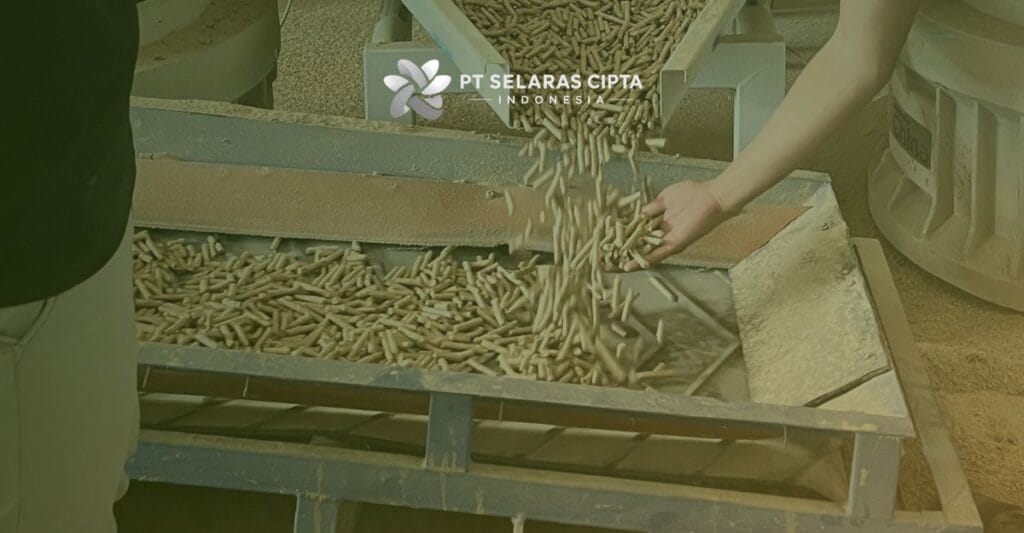
Professional suppliers generally provide laboratory analysis covering moisture content, ash level, calorific value, sulfur level, and additional technical specifications.
However, industrial buyers should also compare actual shipment consistency rather than relying entirely on paperwork alone.
Packaging and Export Preparation
Even high-quality pellets may deteriorate during shipment if packaging systems fail to provide sufficient protection.
Proper Packaging Protects Biomass Quality
Export packaging directly affects biomass condition upon arrival.
Several packaging advantages include:
- Jumbo bags reduce handling disruption.
- Protective liners minimise moisture exposure.
- Strong packaging improves transportation safety.
Most industrial biomass exporters utilise jumbo bags ranging from approximately 700 kg up to 1000 kg capacity depending on loading strategy and buyer requirements.
This packaging system improves loading efficiency while supporting safer biomass transportation during international shipment.
Container Loading Influences Shipment Stability
Container loading quality also affects biomass durability considerably.
Several operational factors remain important:
- Proper loading reduces pellet breakage.
- Balanced stacking improves transportation safety.
- Dry containers protect biomass condition.
Industrial buyers often focus heavily on fuel specifications while overlooking export preparation quality. In reality, improper loading may damage pellets significantly before the shipment reaches destination ports.
Therefore, professional suppliers usually inspect container condition carefully before loading operations begin.
Premium Rice Husk Pellets Exporter and Sustainable Supply
Long-term biomass procurement requires operational consistency across repeated shipments over extended periods. Consequently, buyers should evaluate supplier sustainability beyond initial sample quality alone.
Long-Term Biomass Supply for Industrial Projects
Industrial operations require stable renewable fuel availability in order to maintain operational continuity.
Stable Production Supports Procurement Planning
Several operational benefits depend heavily on stable production capability:
- Continuous production improves shipment consistency.
- Long-term supply supports industrial operations.
- Reliable export schedules reduce procurement risk.
A supplier may deliver excellent sample quality initially while struggling to maintain large-scale production consistency months later. Because of this, buyers should evaluate actual manufacturing capability rather than depending solely on marketing presentations.
Sustainable Biomass Supports Renewable Energy Transition
Biomass fuel increasingly supports industrial sustainability programmes worldwide.
Several renewable energy advantages include:
- Biomass reduces fossil fuel dependency.
- Co-firing systems support emission reduction.
- Renewable fuel improves sustainability strategies.
Industrial biomass utilisation now extends beyond simple fuel replacement because many companies also pursue environmental reporting and decarbonisation objectives simultaneously.
How to Choose a Supplier for Long-Term Biomass Contracts
Large-scale biomass procurement requires deeper evaluation compared with ordinary commodity purchasing.
Evaluate Production Capability and Operational Stability
Production Capacity Must Match Industrial Demand
Several operational factors deserve close attention:
- Industrial projects require continuous biomass supply.
- Limited production may disrupt shipment schedules.
- Stable operations improve long-term reliability.
Buyers should evaluate whether suppliers can realistically maintain monthly shipment volume requirements over long contract periods. Some suppliers may perform well for small trial shipments but struggle during large-scale procurement execution.
Consequently, factory visits remain highly recommended before finalising long-term agreements.
Raw Material Availability Influences Supply Stability
Raw material continuity also affects long-term procurement success.
Several sourcing considerations include:
- Seasonal shortages may affect biomass production.
- Stable sourcing improves manufacturing continuity.
- Agricultural supply chains affect long-term contracts.
Professional suppliers usually maintain stronger raw material management systems capable of supporting continuous production during changing agricultural cycles.
Technical Transparency and Trial Shipments
Industrial buyers should never rely entirely on promotional documents during biomass procurement evaluation.
Laboratory Analysis Supports Procurement Decisions
Several technical specifications require detailed evaluation:
- Moisture content affects combustion efficiency.
- Ash content influences maintenance requirements.
- Calorific value supports industrial energy performance.
Laboratory reports provide important technical insight, yet real operational testing remains equally necessary.
Trial Shipments Help Verify Export Consistency
Trial shipments help buyers evaluate operational reliability under actual industrial conditions.
Several advantages include:
- Trial shipments reduce procurement risk.
- Multiple shipments improve buyer confidence.
- Industrial testing verifies operational compatibility.
For industrial biomass projects involving large procurement volume, one to three trial shipments usually provide more reliable operational insight before long-term contracts begin.
During trial shipment stages, many suppliers and buyers commonly utilise T/T (Telegraphic Transfer) payment methods because both parties still evaluate operational reliability and business compatibility. This arrangement often helps simplify initial export transactions before establishing larger contractual structures.
However, industrial buyers should also conduct direct company and factory visits whenever possible before signing large-scale procurement agreements. Factory inspections may reveal production capability, storage management, quality control standards, packaging systems, and operational transparency far more clearly than documents or virtual meetings alone.
Direct site visits also help buyers evaluate whether suppliers genuinely operate as manufacturers or merely function as intermediaries without stable production infrastructure.
Advantages of Working Directly with Producers
Industrial buyers increasingly prefer direct cooperation with biomass manufacturers for long-term procurement projects.
Direct Cooperation Supports Procurement Stability
Better Technical Transparency and Communication
Several operational advantages include:
- Buyers can inspect production facilities directly.
- Technical coordination becomes more efficient.
- Factory audits improve procurement confidence.
Direct communication often allows faster technical discussion regarding fuel specifications, packaging systems, shipment scheduling, and production adjustments.
More Consistent Export Shipment Quality
Working directly with producers may also improve operational consistency.
Several advantages commonly appear:
- Packaging standards remain easier to monitor.
- Shipment schedules become more predictable.
- Biomass handling quality improves during export.
Because production and export operations remain internally coordinated, manufacturers can usually maintain tighter supervision over quality control and shipment preparation.
Conclusion
Selecting a premium rice husk pellets exporter for sustainable supply involves far more than comparing pricing alone. Industrial buyers should evaluate production consistency, raw material continuity, export capability, packaging systems, logistics coordination, and operational transparency before entering long-term biomass agreements.
At the same time, understanding regional differences between Indonesia and Vietnam may help buyers build more strategic procurement diversification for future renewable energy projects. Buyers should also recognise that several exporters in Vietnam, Singapore, and Malaysia may operate mainly as traders sourcing biomass products from Indonesian manufacturers rather than producing biomass directly.
Trial shipments, laboratory analysis, direct factory inspections, and transparent technical communication all remain essential before large-scale biomass contracts begin. These steps help reduce procurement risk while improving long-term operational reliability for industrial biomass systems.
For companies seeking sustainable biomass fuel supply, reliable export coordination, and long-term industrial biomass partnerships from Indonesia, feel free to contact PT. Selaras Cipta Indonesia for further discussion regarding renewable energy and industrial biomass solutions.