
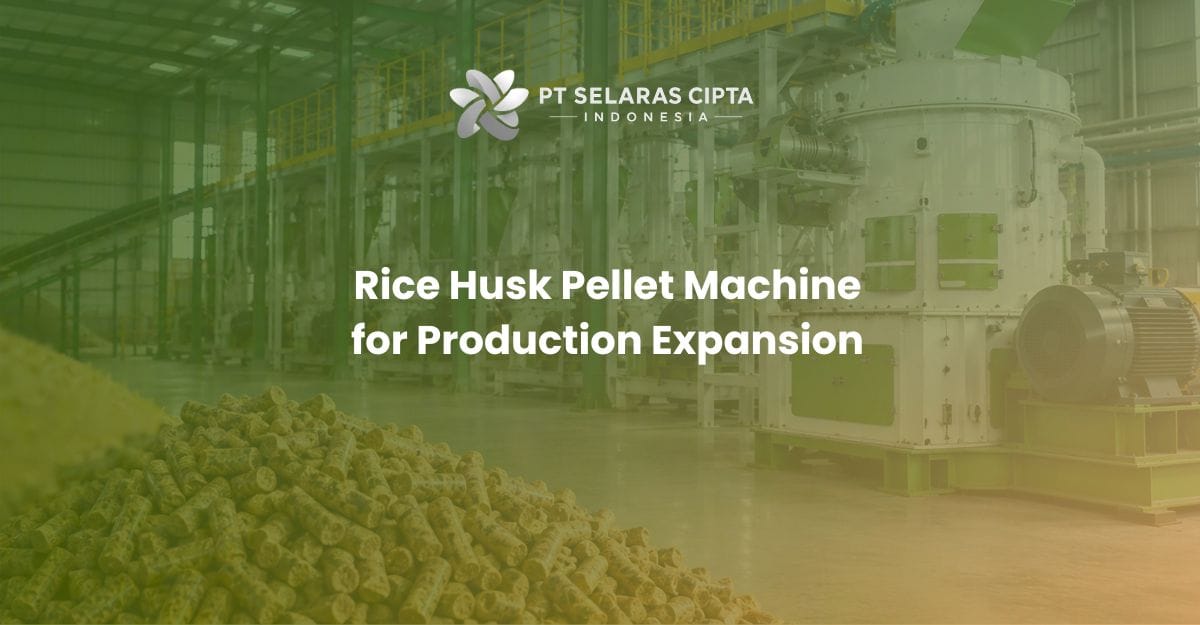
Industrial biomass demand continues growing rapidly as more manufacturers, industrial boiler operators, and renewable energy facilities transition toward sustainable fuel alternatives. Among various biomass products, rice husk pellets continue gaining attention because they offer scalable fuel potential supported by abundant agricultural resources.
However, producing rice husk pellets at industrial scale requires far more than simply installing additional equipment. Many factories successfully operate a rice husk pellet machine during early production stages, yet begin facing serious operational challenges once production targets increase toward industrial-scale output.
Production expansion affects almost every operational area simultaneously, including:
- Raw material handling
- Drying efficiency
- Continuous feeding
- Cooling systems
- Dust management
- Pellet durability
- Electricity demand
- Export logistics
- Maintenance scheduling
Because of that, industrial biomass production requires long-term planning from the beginning instead of relying only on machine capacity assumptions.
This guide explains how rice husk pellet machine systems typically scale from 1,000 tons monthly toward 50,000 tons monthly production capacity for industrial biomass supply and export-oriented operations.
Why Production Expansion Requires More Than Additional Machines
Small biomass operations can still function using semi-manual production systems. However, industrial expansion introduces completely different operational demands.
As production volume increases, factories must maintain:
- Stable pellet density
- Consistent moisture levels
- Reliable machine uptime
- Continuous raw material supply
- Efficient warehouse movement
- Stable export scheduling
Without proper scaling strategy, factories often experience:
- Production bottlenecks
- Unstable pellet quality
- Excessive dust formation
- Increased downtime
- High electricity consumption
- Shipment delays
Consequently, industrial biomass factories focus heavily on production stability rather than chasing short-term maximum output alone.
Understanding Real Rice Husk Pellet Machine Capacity
Many equipment suppliers advertise pellet machine capacity under ideal operating conditions. In real industrial operations, production output depends heavily on overall system stability.
Actual rice husk pellet machine performance often depends on:
- Moisture consistency
- Particle size preparation
- Feeding stability
- Roller condition
- Die condition
- Cooling performance
- Operator experience
- Preventive maintenance
Because of that, experienced biomass producers calculate realistic production capacity instead of relying entirely on theoretical machine specifications.
Typical Industrial Pellet Machine Capacity
Most industrial rice husk pellet machine systems operate within these approximate output ranges:
| Machine Type | Estimated Capacity |
|---|---|
| Small Industrial Machine | 500 kg – 1 ton/hour |
| Medium Pellet Machine | 1 – 2 tons/hour |
| Large Ring Die Machine | 2 – 4 tons/hour |
| High Capacity Industrial Line | 4 – 6+ tons/hour |
Large ring die pellet machines dominate industrial biomass production because they provide:
- Better compression stability
- Higher durability
- Improved pellet density
- Continuous operation capability
- Better export-quality consistency
This becomes especially important for factories targeting international biomass markets.
Rice Husk Pellet Machine Setup for 1,000 Tons Per Month
Factories targeting approximately 1,000 tons monthly usually represent the early transition into industrial biomass manufacturing.
Assuming operations run:
- 25 production days monthly
- 20 operational hours daily
Required production output becomes:
\frac{1000\ \text{tons}}{25\times20}\approx2\ \text{tons/hour}
Under realistic industrial conditions, factories generally require:
- 1 large ring die pellet machine
or - 2 medium-capacity pellet machines
Typical Production Configuration
Factories at this stage commonly use:
- 1–2 pellet machine lines
- Basic hammer mill systems
- Semi-industrial drying units
- Cooling systems
- Semi-automatic packaging
- Small warehouse infrastructure
This production level often supports:
- Regional biomass supply
- Industrial boiler fuel
- Trial export operations
- Small commercial biomass markets
At this stage, factories also begin learning the importance of proper biomass storage management because poor storage conditions can quickly reduce pellet quality. Proper moisture protection and warehouse planning become increasingly important during production expansion.
For additional guidance, see the rice husk pellet storage guide.
Rice Husk Pellet Machine Setup for 3,000 Tons Per Month
At approximately 3,000 tons monthly, biomass factories become significantly more industrialized.
Estimated hourly production requirement:
\frac{3000\ \text{tons}}{25\times20}\approx6\ \text{tons/hour}
Most factories require:
- 2–3 large ring die pellet machines
or - 4–5 medium industrial machines
Additional Infrastructure Requirements
Factories producing 3,000 tons monthly usually require:
- Continuous drying systems
- Automated conveyors
- Better dust management
- Larger cooling systems
- Expanded raw material storage
- Improved warehouse handling
At this level, maintenance scheduling becomes increasingly important because downtime can directly affect shipment schedules.
Why Multiple Production Lines Matter
Industrial biomass factories rarely depend on a single production line.
Multiple pelletizing lines improve:
- Production continuity
- Maintenance flexibility
- Operational redundancy
- Capacity scalability
- Pellet consistency
If one production line temporarily stops, the remaining lines can continue operating and reduce operational disruption.
Rice Husk Pellet Machine Setup for 5,000 Tons Per Month
Factories targeting 5,000 tons monthly already operate as fully industrial biomass production facilities.
Estimated hourly production requirement:
\frac{5000\ \text{tons}}{25\times20}\approx10\ \text{tons/hour}
Typical factory configurations may include:
- 3–5 large ring die pellet machines
- Multiple hammer mills
- Rotary drying systems
- Industrial cooling systems
- Automated feeding systems
- Conveyor infrastructure
- Dust extraction systems
Operational Priorities at 5,000 Tons Monthly
Factories must increasingly prioritize:
- Machine uptime
- Pellet durability
- Moisture consistency
- Energy efficiency
- Raw material continuity
- Stable packaging quality
At this stage, many factories begin supplying:
- Industrial boiler operators
- Biomass distributors
- Export buyers
- Medium-scale power plants
International buyers increasingly expect stronger pellet consistency because combustion performance directly affects industrial operations.
Factories targeting export-grade biomass fuel also focus heavily on improving pellet quality and production consistency throughout the manufacturing process.
For more information about industrial-grade biomass manufacturing standards, visit the premium rice husk pellets production process.
Rice Husk Pellet Machine Setup for 10,000 Tons Per Month
Factories producing 10,000 tons monthly enter large-scale industrial biomass manufacturing territory.
Estimated hourly production requirement:
\frac{10000\ \text{tons}}{25\times20}\approx20\ \text{tons/hour}
Most factories require approximately:
- 5–8 large industrial pellet machines
- Multiple automated production lines
- Industrial rotary drying systems
- Advanced dust collection systems
- Large warehouse infrastructure
- Dedicated maintenance teams
Why Operational Redundancy Becomes Critical
At industrial scale, factories cannot depend on a single operational line.
Multiple production systems improve:
- Export reliability
- Production continuity
- Maintenance flexibility
- Capacity expansion capability
- Quality consistency
This operational redundancy becomes essential for factories supplying continuous industrial biomass demand.
Expansion Toward 20,000 Tons Per Month
As global biomass demand continues increasing, many producers now prepare expansion plans toward 20,000 tons monthly production capacity.
Estimated hourly production requirement:
\frac{20000\ \text{tons}}{25\times20}\approx40\ \text{tons/hour}
Factories targeting this scale generally require:
- 10–15 large ring die pellet machines
- Fully automated feeding systems
- Large rotary drying facilities
- Industrial raw material handling systems
- Advanced conveyor infrastructure
- Expanded warehouse operations
- Dedicated quality control systems
Rice Husk Pellet Machine Strategic Considerations for Large Expansion
Factories expanding toward 20,000 tons monthly must prioritize:
- Stable rice husk sourcing
- Spare part inventory
- Long-term electricity planning
- Logistics scalability
- Production redundancy
- Continuous maintenance systems
At this level, operational efficiency directly affects long-term profitability and export reliability.
Rice Husk Pellet Machine for Long-Term Expansion Toward 50,000 Tons Per Month
Factories targeting 50,000 tons monthly operate within highly industrialized biomass manufacturing ecosystems.
Estimated hourly production requirement:
\frac{50000\ \text{tons}}{25\times20}\approx100\ \text{tons/hour}
Factories at this scale may require:
- 25–40 industrial pellet machines
- Multiple integrated production zones
- Massive drying infrastructure
- Fully automated material handling
- Industrial engineering divisions
- Large-scale export logistics systems
- Extensive warehouse capacity
Why Scalability Planning Matters Early
Factories planning large expansion must design infrastructure carefully from the beginning.
Poor scalability planning often creates:
- Space limitations
- Logistics congestion
- Production bottlenecks
- Maintenance inefficiency
- Energy instability
Consequently, long-term factory layout planning becomes increasingly important as production targets grow.
Why Raw Material Preparation Matters as Much as Machine Capacity
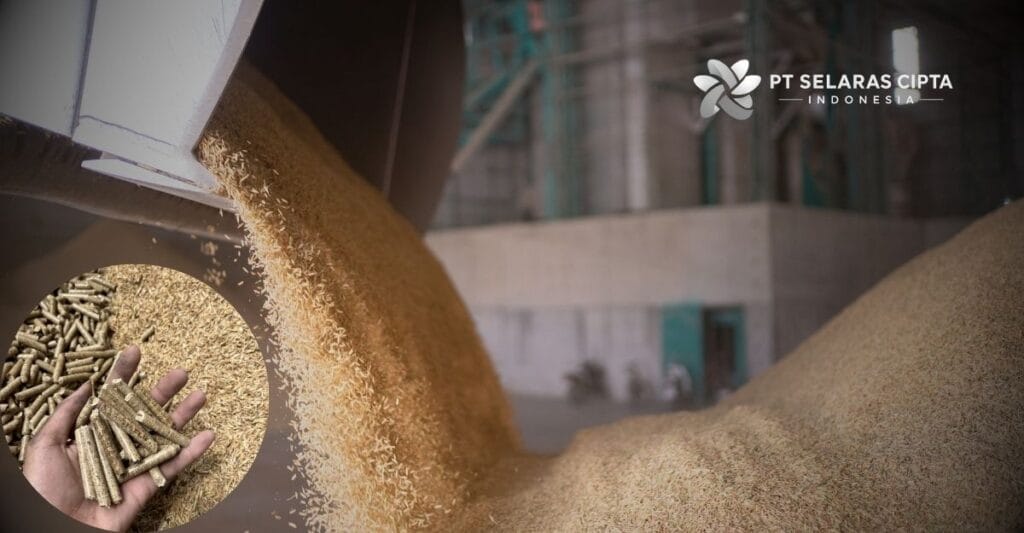
Many factories focus heavily on pellet machine size while underestimating raw material preparation quality.
In reality, unstable raw material conditions can significantly reduce machine efficiency.
Important preparation factors include:
- Moisture consistency
- Particle size uniformity
- Stable feeding systems
- Contaminant removal
Even high-capacity rice husk pellet machine systems cannot operate efficiently without stable raw material preparation. Successful biomass factories therefore optimize the entire production ecosystem rather than focusing only on pelletizing equipment.
How Industrial Biomass Producers Improve Production Stability
Large-scale biomass factories prioritize long-term operational consistency over temporary peak output.
Professional producers improve production stability through several approaches.
Preventive Maintenance Systems
Regular maintenance helps reduce:
- Roller failure
- Die cracking
- Bearing overheating
- Unexpected downtime
Moisture Stabilization
Maintaining stable moisture levels becomes increasingly important as rice husk pellet production expands toward industrial scale. Even small moisture fluctuations may significantly affect pellet density, combustion consistency, storage durability, and machine efficiency.
Stable moisture improves:
- Pellet density
- Combustion quality
- Export durability
- Machine efficiency
Because of that, many biomass producers begin implementing industrial monitoring systems such as moisture meter for rice grain measurement
Automated Feeding Systems
Automation helps stabilize:
- Material flow
- Pellet consistency
- Machine load
- Continuous operation
Production Line Redundancy
Multiple production lines allow factories to continue operating during maintenance periods while reducing operational risk.
Conclusion
Expanding industrial biomass production requires far more than simply adding another rice husk pellet machine. Large-scale pellet manufacturing depends on operational stability, scalable factory systems, raw material preparation, preventive maintenance, and long-term production planning.
Factories targeting expansion from 1,000 tons toward 50,000 tons monthly must carefully balance machine capacity, production redundancy, logistics coordination, and pellet quality consistency.
As global biomass demand continues increasing, scalable industrial pellet production systems will play an increasingly important role in supporting renewable energy supply chains worldwide.
Interested in industrial-grade biomass fuel for long-term supply and export demand? Explore our rice husk pellet products to learn more about production capacity, pellet specifications, and scalable biomass solutions for industrial applications.